Physical security has traditionally focused on known, repeatable threats such as theft, intrusion, vandalism, and physical risks to staff, with subsequent preventative measures typically designed around these established patterns.
Today, the model is becoming less effective as threats are more fluid, less predictable and often influenced by factors outside an organisation’s control, shaped by a combination of geopolitical, economic and social pressures.
As a result, anticipating and preparing for emerging risks is more complex, requiring a broader and more adaptive approach to physical security.
Historically, organisations have dealt with theft, unauthorised access to property, vandalism, and physical risk to staff, with these threats generally consistent in nature and location; as a result, security measures could be designed to deter and respond effectively.
That level of predictability is diminishing. Incidents are no longer confined to clear, distinct categories and can arise quickly with little to no warning. Organisations are now seeing more frequent, lower-level threats and a wider range of behaviours and scenarios. This creates greater operational uncertainty, placing pressure on security planning across a wide range of situations.
There is also an increase in overlapping threat types. Now, opportunistic theft can escalate into confrontation and a protest can disrupt operations and lead to property damage.
As well as this, opportunistic threats, which were traditionally random, have become more organised and targeted risk can now emerge more quickly from wider events. This lack of a predictable pattern creates additional complexity for organisations.
Global events and tensions are no longer distant and confined to specific regions. They can have direct, local consequences and organisations with no direct involvement can be impacted.
Local environments are increasingly influenced by global issues. International conflicts or political events can trigger protests and demonstrations in city centres, around transport hubs and near corporate or government sites.
The rise in protests and civil disruption, both in frequency and scale, can interrupt normal business operations, restrict access to buildings and create safety concerns for staff and visitors. These events are not always predictable in timing or intensity and even peaceful demonstrations can become confrontational and result in property damage.
Public-facing environments such as banking, transport, healthcare and retail are particularly exposed, increasing the need to manage access and movement, protect staff and customers and maintain operations during periods of disruption.
As a result, strategies must account for external, fast-moving events, with physical security measures that are flexible, layered, and capable of rapid response.
Organisations are seeing the real-world impact of wider economic conditions as cost pressures and financial strain influence individual behaviour. Risk is no longer driven solely by intent, but also by circumstance.
Incidents are becoming more frequent rather than isolated, with increases in shoplifting, asset theft and unauthorised access to premises. Individually, these may appear low impact, but their frequency creates a more significant overall risk. This repeated, ongoing activity creates continuous disruption for businesses and places increased strain on staff.
Alongside geopolitical instability and increasing economic pressure is a shift in how people interact in public-facing environments. Increased impatience, frustration and non-compliance are contributing to more unpredictable interactions between staff and the public.
Employees are often the first point of contact when something goes wrong and are exposed to verbal abuse, aggressive behaviour and confrontational situations, particularly in healthcare, retail and transport settings. As a result, they are not only performing their core role but also navigating difficult situations and incidents.
This has placed greater emphasis on the need for organisations to protect staff and reduce risk exposure. The wider business impact is reflected in staff wellbeing, absence and retention levels.
Traditional security measures were limited to addressing one system at a time for one problem, but with overlapping and evolving threats, this approach leads to gaps in protection. Modern security solutions need to be multi-layered, well-integrated and designed to respond to different types and levels of risk.
In practice, this layered approach comprises several elements, each addressing a distinct aspect of risk and working together to create a more resilient environment.
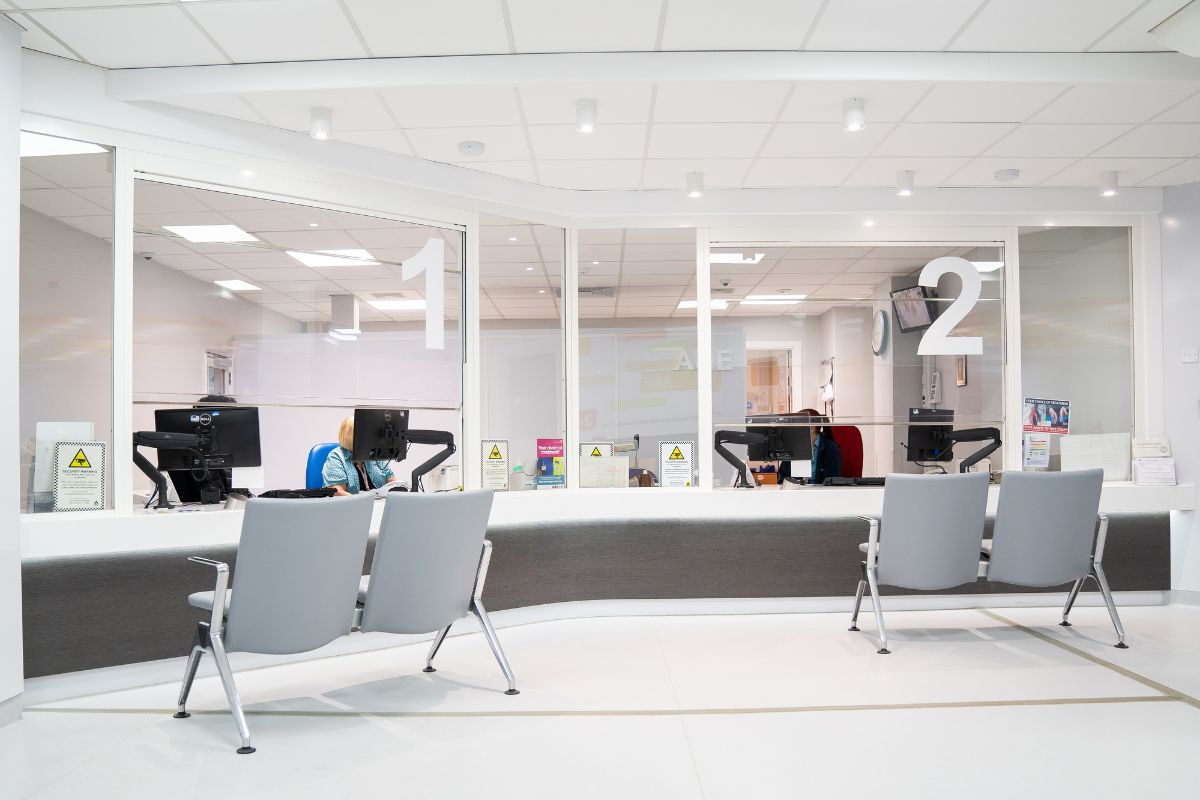
Physical barriers, such as doors, glazing, screens and partitions, provide a clear, first line of defence for employees. Access control systems build on this by defining who can enter specific areas, when and under what conditions, reducing the risk of unauthorised movement within a site.
Environmental design also plays an important role, with layout, visibility, and positioning of security features influencing behaviour and helping to reduce day-to-day risk to operations. In some settings, monitoring and visibility systems provide an additional layer of oversight and response.
No two environments are the same, and risk can vary depending on industry, site type, and location; therefore, a security solution that works well in one setting may not be suitable in another.
Risk is also shaped by footfall, visibility, and the nature of the activity, with public-facing environments typically having higher levels of interaction and greater exposure. In restricted or high-security sites, access control and containment are more critical.
As well as addressing the relevant risk, security measures must be easy to maintain, should allow safe and appropriate access for employees and customers and avoid disrupting operations.
Designing a physical security strategy for real-world use means the solutions need to work in busy, unpredictable and high-traffic environments, with durability, ease of use, and integration all key considerations.
Risk will continue to change as external pressures shape the operating environment. Organisations need to plan ahead for this ongoing shift rather than focusing on fixed scenarios.
Physical security strategies cannot depend solely on assumptions or known threat models and must be capable of adapting to varying threat levels and responding to emerging risks.
Organisations must move away from reactive upgrades following incidents and shift towards continuous assessment and ongoing refinement. Security should also be aligned with wider business priorities, including operational resilience, workforce safety and continuity planning.
The physical security landscape is becoming increasingly complex, shaped by external pressures and evolving threat profiles that are less predictable and more interconnected than in the past. As a result, organisations can no longer rely on static measures or reactive responses to manage risk effectively.
Instead, security must be approached as an ongoing, strategic function built around adaptability, integration and continuous improvement. This is reflected in the role of providers such as Safetell, whose solutions support layered and environment-specific approaches to physical security.
By adopting more flexible and integrated strategies, organisations are better positioned to protect their people, assets and operations while maintaining resilience in an uncertain and changing risk environment.