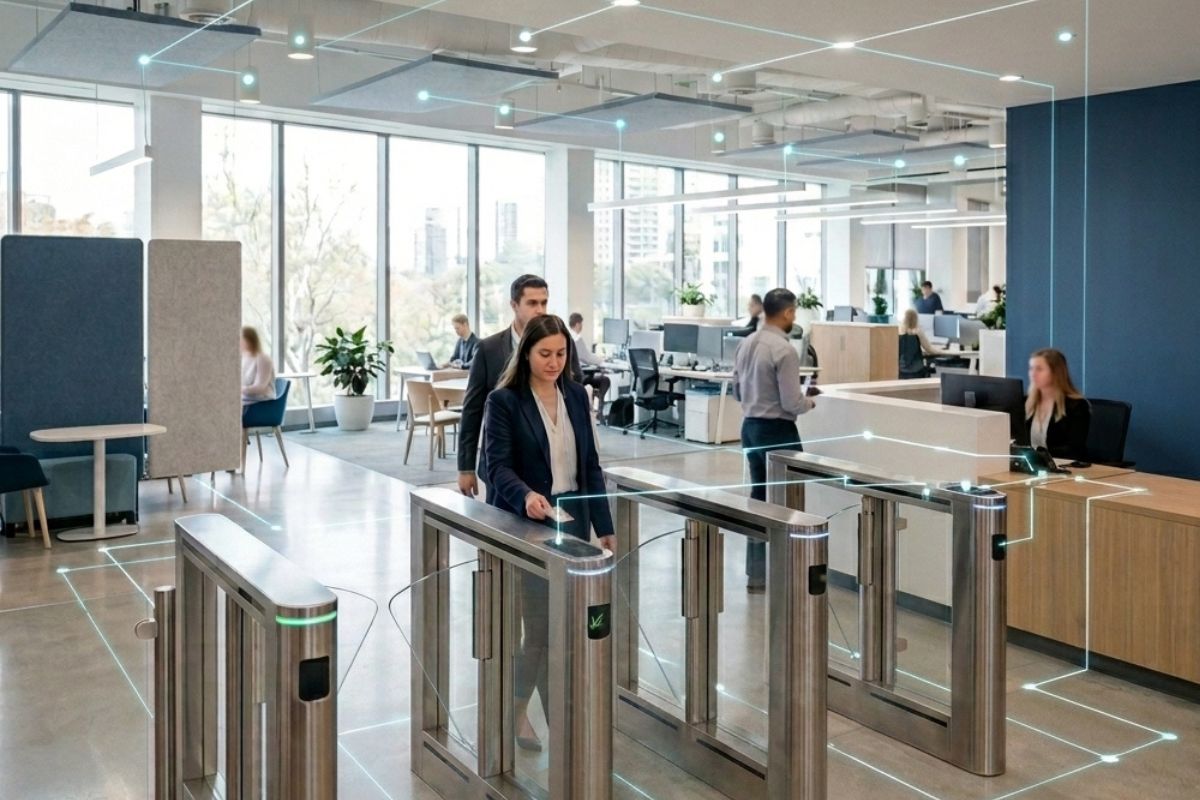
Security was traditionally managed in separate business silos, with physical security and digital systems operating independently. Modern organisations recognise the need for a different approach and are increasingly seeking more connected ecosystems to improve visibility, efficiency and responsiveness.
Integrating physical security infrastructure with intelligent software platforms allows businesses to connect access control, visitor management, entrance control and building security systems through a single management environment. Rather than operating as separate components, these systems can work together to provide real-time insight, automated security processes and greater control over who can access specific areas and when.
The security landscape has evolved alongside the growing complexity of modern workplaces. With organisations operating across multiple buildings and managing hybrid working, contractors, visitors and delivery personnel, expectations around security, compliance and operational efficiency have shifted.
Standalone security systems have their limitations. Access control systems that operate independently of entrance security and manual visitor management processes can create gaps in security coverage and operational oversight. When security operates in silos, companies often have a limited view across key security touchpoints, which can lead to slower responses to incidents, unauthorised access attempts and potential security breaches.
Bringing physical security and digital solutions together enables companies to manage multiple security functions through a single platform. Rather than treating access control, visitor management and entrance security as separate systems, security teams gain a centralised view of people, movement and access permissions.
Modern software platforms can integrate with a wide range of physical security infrastructure, including access control systems, visitor management solutions, speed gates, security doors and reception security products. This enables organisations to automate processes, improve operational visibility and maintain greater control over who can and cannot access specific areas and when.
Beyond access management, integrated security platforms can also support building occupancy monitoring, reporting and audit functions, providing valuable operational data alongside enhanced security oversight.
By connecting previously separate systems, businesses can respond more quickly to security events, make better-informed decisions and reduce administrative complexity. The result is a more efficient security operation that strengthens protection while supporting wider business objectives.
One of the biggest advantages of converged security systems is the ability to manage access more intelligently and consistently. Instead of relying on static permissions or manual processes, integrated access management platforms allow businesses to control who can access specific areas, when access is allowed and under what circumstances.
From employees and contractors to delivery personnel and visitors, access permissions can be tailored to individual needs while maintaining a clear audit trail and centralised oversight. Temporary access rights can be issued as needed, while time-based restrictions can allow sites to control access outside of normal working hours. For businesses working across multiple locations, permissions can be managed centrally to provide consistency and reduce administrative complexity.
Digital solutions can provide instant access updates, allowing permissions to be granted, amended or revoked as requirements change. Remote administration and live monitoring capabilities help security teams maintain visibility across multiple locations, while the ability to respond immediately to security events supports a more agile and proactive approach to security management.
The benefits of security convergence become even more apparent when intelligent access management is combined with physical entrance control solutions.
Speed gates, security doors and reception security products are often the first line of defence within a building, helping companies manage the movement of employees, visitors and contractors. When integrated with access management software, these solutions become part of a wider security strategy rather than standalone physical barriers. Access permissions, visitor credentials and security policies can all be enforced automatically at the point of entry, creating a more seamless and secure experience.
Integration can also streamline visitor management processes. Automated registration and controlled entry authorisation help reduce administrative workloads, minimise reception delays and ensure visitors are managed consistently without compromising security.
In addition to supporting a stronger security strategy, an integrated approach can also provide better data and reporting capabilities. Organisations gain greater insight into building occupancy, more accurate access logs and comprehensive audit trails that can support compliance requirements and assist with incident investigations.
The data generated by connected security systems can also deliver value beyond security teams. Occupancy information, access patterns and visitor data can help organisations make more informed decisions about facilities management, space utilisation and operational planning. As a result, security systems become a source of business intelligence as well as physical protection.
Better security data can also support workforce and facilities planning by providing a clearer picture of how buildings and spaces are being used. This allows organisations to make decisions based on actual occupancy and usage patterns rather than assumptions, helping to improve efficiency while supporting health and safety objectives.
While the principles of security convergence remain consistent, the specific benefits can vary between sectors. By bringing physical security infrastructure and digital management platforms together, organisations can address a wide range of operational, security and compliance challenges.
In corporate offices, security convergence can improve visitor management, strengthen reception security and provide more effective employee access control.
Educational settings face unique safeguarding responsibilities and security convergence can help institutions maintain a secure environment while enabling controlled campus access and providing more robust visitor tracking.
Hospitals and other healthcare facilities must protect restricted areas while ensuring staff can move quickly between sites. Security systems must support both patient and staff safety while enabling efficient day-to-day operations.
For businesses responsible for critical infrastructure or public-facing buildings, the challenge is often managing large numbers of people while maintaining high levels of security and resilience. Combining physical and digital security measures can support this level of high-volume access management and layered security requirements without compromising monitoring and reporting.
Bringing physical and digital security systems together within a single, integrated framework allows companies to improve oversight, efficiency and responsiveness across the business. Rather than handling access control, entrance security and visitor management as separate functions, a connected approach enables better visibility, improved operational efficiency and more consistent security experiences.
The combination of intelligent software platforms and physical security infrastructure enables businesses to respond more effectively to evolving security requirements while maintaining control over the movement of employees, contractors, and visitors. By integrating access management software with physical protection measures such as speed gates, security doors and reception security products, businesses can create environments that are both secure and operationally efficient.
Solutions such as Grosvenor Technology’s access control software, working alongside Safetell’s entrance control and physical security products, demonstrate how security convergence can be applied in practice. Together, the technologies help companies strengthen security, improve oversight and create more responsive environments that support organisational and security objectives.